
"Costa Rican coffee history"
500 article(s) found

How to make Costa Rican red honey coffee? Is Costa Rican red honey good to deal with coffee beans?
Professional coffee knowledge exchange more coffee bean information please pay attention to the coffee workshop (Wechat official account cafe_style) Costa Rica Tobushi garden red honey treatment method hand flushing temperature, grinding degree, powder than the recommended cultivation of Costa Rica coffee has a long history, but in the past 10 years, more cutting-edge dry treatment has become a trend, collectively known as the new method of honey treatment, the use of scraping machine adjustment

Costa Rican Tangmeo processing plant Beneficio Don Mayo introduces Costa Rican coffee
Professional coffee knowledge exchange more coffee bean information follow Coffee Workshop (Wechat official account cafe_style) is determined to become a leader in Costa Rican coffee, Don-Mayo processing plant, although it has a history of 15 years, but it is actually a young processing plant-the family cooperative was founded in 1994, but did not set up its own processing plant until 2005. The processing plant is located in Tarazhu--

A brief introduction to the History and Culture of the Origin and Development of Costa Rican Yerzaro Coffee
Natural resources include iron, manganese, mercury, bauxite, gold and silver, among which the reserves of bauxite, iron and coal reach 150 million tons, 400 million tons and 50 million tons respectively. The recent situation is mainly distributed in the central gold belt area of the northwestern Tilaran Cordillera Mountains. Calcium carbonate is distributed in the northwest and has high taste. The purity of calcium carbonate extracted from limestone can reach 99.5%. Brother

Flavor characteristics, producing areas and cooking parameters of single bean in Diamond Hill Manor, Costa Rica
For the exchange of professional baristas, please pay attention to the coffee workshop (Wechat official account cafe_style) Costa Rica Diamond Hill Manor single bean flavor characteristics, producing areas and brewing parameters Costa Rican coffee was first exported in 1779 when it was introduced from Cuba in 1820. There are about 32000 coffee farmers, with an average planting area of less than one hectare (1).

Costa Rican Diamond Mountain area Information Coffee beans how to describe the flavor of varieties
Professional baristas please follow the Coffee Workshop (Wechat official account cafe_style) in recent years, Costa Rica has not let everyone down, and the Cmax P value has left Guatemala far behind, whether it is made into a single product or put in a comprehensive recipe, it is a good choice. Costa Rican coffee cultivation was first introduced from Cuba in 1779 in 1820.

Grading, price, raw bean and baking curve of single bean at Diamond Hill Manor in Costa Rica
The exchange of professional baristas please follow the coffee workshop (Wechat official account cafe_style) Costa Rica Diamond Hill Manor single bean classification, price, raw beans and baking curve Costa Rica Costa Rican population: 4586000 in the past, Costa Rica has successfully sold its coffee according to the name of the region where it is produced. However, tastes vary from region to region, so this is not true.

Costa Rican coffee features Costa Rican coffee
For the exchange of professional baristas, please follow the coffee workshop (Wechat official account cafe_style) Costa Rica TARRAZ Costa Rica Tarraz from the international coffee export company Hacienda La Minita. Hacienda La Minita Manor is located in the famous Tarraz producing area of Costa Rica. Because of its excellent geographical environment and microclimate, La Minita Manor
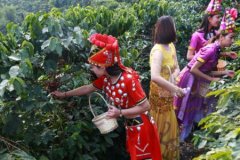
A brief introduction to the history and culture of the origin and development of Costa Rica's Saint Roman boutique coffee beans.
All the coffee trees planted in Costa Rica are Arabica coffee trees. through improvement, the quality of coffee beans is better and more stable. in order to facilitate picking, coffee trees are kept at a height of about 2 meters through continuous pruning. The coffee that people eat is the taste of the seeds in the fruit that are brewed in water. After picking raw coffee beans, the peel, pulp, seed film and sun exposure must be removed.

What's so special about Costa Rican coffee? is Costa Rican diamond yellow honey better?
Professional coffee knowledge exchange more coffee bean information please follow the coffee workshop (Wechat official account cafe_style) front street-Costa Rica Diamond Yellow Honey introduction Costa Rica's land area ranks third from the bottom in Central America, but because the country attaches great importance to the development of the coffee industry, Costa Rica has coffee planting and processing technology that can not be surpassed by any major producing country in the world.

Costa Rican Tarazu Coffee Diamond Hill Manor introduces the flavor of Costa Rican coffee
Professional coffee knowledge exchange more coffee bean information please follow the coffee workshop (Wechat official account cafe_style) Product name: Costa Rica Tara Pearl Diamond Mountain Alpine hard Bean washing (Costa Rica Tarrazu SHB Montanas del Diamante Washed) Flavor description: baked almonds, cream, baked toast, sugar sweet, solid and full-bodied, overall flat

Costa Rica Diamond Hill Manor single Bean species, Brand recommendation and Manor introduction
For the exchange of professional baristas, please follow the coffee workshop (Wechat official account cafe_style) Costa Rica Diamond Hill Manor single bean varieties, brand recommendations and manor introduction are also mentioned on another website, most of the varieties grown here are Red Catuai, that is, a hybrid of Caturra and Mundo Novo. The granules of these raw beans are not large, about 15.

Differences, distinctions and prizes of single beans at Diamond Hill Manor in Costa Rica
For the exchange of professional baristas, please pay attention to the coffee workshop (Wechat official account cafe_style) Costa Rica Diamond Hill Manor single bean differences, distinctions and awards Costa Rica coffee cultivation was introduced from Cuba in 1779 in 1820 before the first export of coffee, there are about 32000 coffee farmers, the average planting area per farmer is less than one hectare.

Historical Flavor description of Coffee Bean production in Costa Rica
The exchange of professional baristas please pay attention to the coffee workshop (Wechat official account cafe_style) Costa Rican coffee was first exported in 1779 when it was introduced from Cuba in 1820. There are now about 32000 coffee farmers, with an average planting area of less than one hectare (10000 tons). Costa Rica has a population of 41 billion (2006), coffee

Acidity Ideal St. Roman Estate Fine Coffee Bean Origin Development History Culture Introduction
Other types of Brazilian coffee, such as Rio, Parana, etc., can be produced in large quantities without too much care. Although the taste is rough, it is a kind of inexpensive coffee. Due to its distribution throughout the country, the solid quality varies, and it has its own standard (NO.2 NO.8 according to the amount of impurities, NO.13 NO.19 according to the size of beans, divided into six grades according to taste).

Introduction of Costa Rican Father Rosa Coffee producing area and description of its Flavor characteristics
Costa Rica is located in Central America, the climate and soil conditions are very suitable for coffee growth, with a history of two hundred years of coffee cultivation. In recent years, Costa Rica conforms to the market trend and makes great efforts to develop high-quality coffee. Although the output is small, Costa Rican coffee with pure taste and rich aroma has occupied an important position in the international boutique coffee market because of its excellent quality.

Introduction of planting varieties of single product beans in Costa Rica
The exchange of professional baristas please pay attention to the coffee workshop (Wechat official account cafe_style) Costa Rican coffee was first exported in 1779 when it was introduced from Cuba in 1820. There are now about 32000 coffee farmers, with an average planting area of less than one hectare (10000 tons). Costa Rica has a population of 41 billion (2006), coffee

Characteristics of Costa Rican Black Pearl Coffee Lajas processing Plant about Coffee Cherry Fruit
About Costa Rica's coffee about Costa Rica has a history of more than 200 years. It is not only an important basis for the country's economy and people's livelihood, but also an indispensable role in the global coffee history. In the past decade, it has become popular all over the world as a micro-processing farm. In this small Central American country, it has created thousands of positions because of its special geographical environment.

Costa Rican coffee flavor Central and South American coffee characteristics Tara Pearl Diamond Villa washing SHB card
Costa Rican coffee plants were imported from Cuba in 1779 and exported for the first time in 1820. There are now about 32000 coffee farmers, with an average of less than 10000 yuan per farmer. Costa Rica has a population of 410 million (2006), an active coffee planting area of 82500 square meters, an annual output of 1.7 million bags (60kgs per bag), and an annual consumption of 38 million bags in China.

Costa Rican Yellow Honey Yelsa Rocadura Fine Coffee Bean cultivation Geographic location Climate Sea
Costa Rican coffee has always been regarded as a perfect type of classic flavor, balanced, clean and mild is his tone. This batch of western valley Yerzaro treatment plant is famous for its excellent natural geographical conditions and excellent regional planting management techniques. almost perfect classic flavor, lively citrus flavor in acidity, BlackBerry aroma, acidity and taste thick, melon